
Carpet Cleaning Mistakes That Make Stains Worse
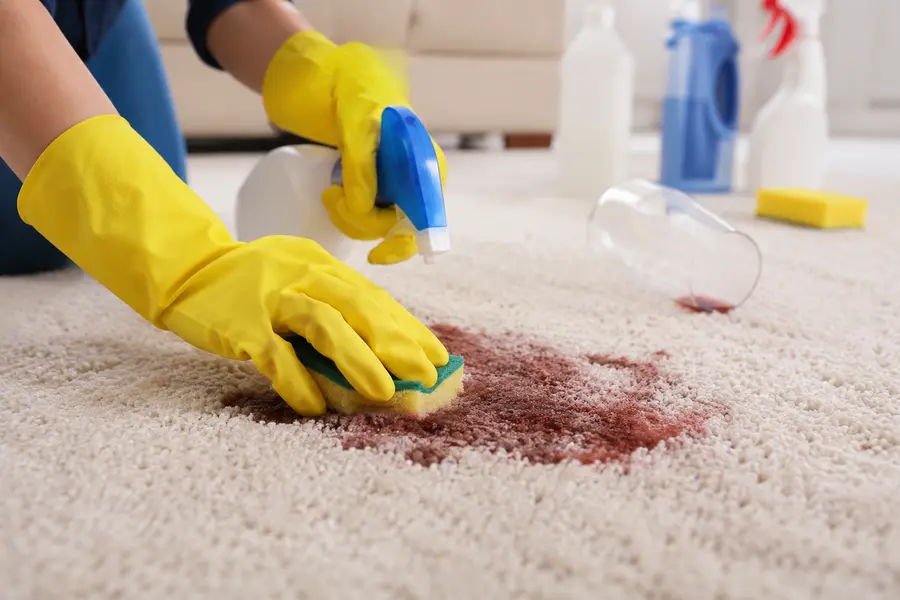
Carpet Cleaning Mistakes That Make Carpet Stains Worse
Stains spreading while you clean? That scrubbing might do worse than good. Most times, effort backfires. People just knock the water on a bit more, they get a bit more forceful with the scrubbing, they give a few different products a shot, and the stain spreads! Here is an example where more really is less. So why not, before following these kinds of steps, see if you’re just moving the stain around rather than removing it?
1. Scrubbing Too Hard, Too Fast
The main error people make in cleaning up the carpet is to attack a new stain with way too much bite straight away. A vigorous scrubbing motion will drive a stain further into the carpet fibers and ensure a much wider area than where the spill was. Always dab a stain with a clean cloth and pat gently in a slow manner, applying light, constant pressure. From your clean cloth to the outside edge, work toward the center to make sure a spill does not become any larger than it was, and this could save your carpet from enormous suffering.
2. Using Too Much Cleaning Product
Actually, more isn’t better when it comes to cleaning power, a lesson most homeowners learn the hard way. Too much cleaning solution wicks up through the carpet backing and pad and deposits a slimy coating that readily attracts dust. You can’t get that coating out without a really long rinse, and it looks dirty all over again before you realize it. A little measured all at once, cleaning the blot , a little monster gives far better results every single time you clean. Less really is more when it comes to carpet care.
3. Over-wetting carpets causes damage
Over-wetting carpeting, which is one of the worst yet most common mistakes by homeowners in carpet cleaning, is drowning the carpeting. Once the carpeting becomes saturated with moisture, it can 100% instantly penetrate and get into the layer underneath it, which hamper dries ability. Hidden moisture will prepare ideal growing situations for bacteria and fungi growth, which will vanish before anyone becomes aware of it. Sometimes, an ordinary mist and mild blot will be enough to maintain staining at bay.
4. Waiting Too Long to Act
Time is really a huge factor when you have any spill or stain on carpets or rugs. The longer the time a stain remains, the higher the layers of fibers it infiltrates and becomes embedded in. New spills are the same here, easier to help blot up cleanly before it gets a chance to set and stick to the carpet fibers. Doing something within minutes of a spill can save you from a permanent stain. Time is of the essence more than anything else here.
5. Using the Wrong Cleaning Product
Not all cleaning products are designed for all types of stains, and on the wrong end of a product’s intended use is an error even experienced and well-meaning cleaners make. When you put a harsh chemical on a delicate fabric or on a protein-rich stain, you can wind up letting that stain bake into your carpet. Not merely grab & go. When you lift a product to clean with, be sure to recognize the type of stain that you are working with. Using a recommended product for the specific type of stain is one of the more crucial stages in safe, efficient carpet cleaning. while a proper carpet maintenance service also helps protect fibers from long-term damage. A bit of study in the beginning spares a deal of regret in the end.
6. Mixing Products Without Thinking First
Many homeowners mix two or three products with the hope of creating something more solid that will be more powerful on those stubborn stains. Though the combination of those four or five products may cause the emission of dangerous gases, cancel out the products’ ability to clean or cause a chemical reaction, which could very well destroy your carpets. Even though bleach and other products containing ammonia are very dangerous on their own, it would be best not to put them in the same mix. Always try a spot test before applying the product to any visible stain on your carpet. Think more ingredients mean a better product!
7. Ignoring the Carpet Fiber Type
Wool, nylon, polyester, and olefin carpet fibers, for example, all respond differently to the cleaning agents and temperature of the water applied. For instance, hot water used with wool carpets will result in severe shrinkage and permanent fiber damage in a very short amount of time. A lot of individuals make this error in carpet cleaning, only to find out that they never actually checked what the fiber of the carpet was before cleaning it. Reading your carpet’s care label or consulting with the manufacturer is a two-minute job that could save you hundreds of dollars in replacement costs. Read your carpet before you clean it.
8. Rinsing With Too Much Water
Once they put a cleaning solution onto a surface, they rinse with water by the gallon to be sure they have washed away every trace of product used. Saturating the carpet excessively during the rinsing process is equally as harmful as the initial soaking during the cleaning process itself. Too much rinse water forces dissolved stain particles deeper into the pile rather than lifting them out fully. Rinsing with a moist cloth and then drying with a dry one is the right approach , and it’s far safer to always rinse off any cleaning product used. Allow the rinse to be as dry as possible for best results.
9. Skipping the Blotting Step Entirely
Blotting is the single most critical physical step for achieving a clean rinse of any liquid stain from a carpet surface properly once and for all. It has been rushed through or overlooked entirely, as I can tell, as the shop-rubbings that abstract it really are too many and too aggressive. Wiping smears the stain horizontally, pushes the liquid further in, and abrades the texture of the carpet in layers that are truly impossible to reverse. Nothing actually pulls a stain out like dabbing with a white cloth clean cloth from the outside edge toward the center of the stain. It is a matter of patience, but it always makes for a better job.
10. Using Colored Cloths on Stains
This error is minuscule; however, it causes major problems that very few homeowners ever trace back to the cleaning routine at all, regrettably. While blotting a stain with a dyed or printed towel is an easy way to do more damage. Say, the dye of the cloth can transfer to the damp fiber of your carpet, which leads to a new stain piled on the previous one like a cake. This new stain would be much harder to clean than the last. To avoid this frustrating problem, always use a plain white rag or white paper towels when blotting carpet stains. White cloths enable you to tell exactly how much you’re removing and what you’re removing.
11. Skipping Professional Cleaning Altogether
Even the most vigilant homemaker missteps a bit in carpet cleaning now and then, and it’s perfectly normal and wholly understandable. While it Sure can be dealt with on the home level, the attempt to take the carpet to a sizable puddle of moisture, tear it damage by trying to remove it yourself or sending in a professional grade piece of equipment to save it, you are calling in the hot-water extraction which is the technique used by most professional carpet cleaners with commercial grade solutions that will actually pull dirt from the deepest levels of the padding in your carpet. It would be advisable to have the carpet cleaned professionally once or twice a year to keep it in really excellent condition and prolong its life A lot. It’s an endowment that always returns well.
Conclusion
Carpet cleaning mistakes happen more often than you think, and they happen for all the right reasons. From over-wetting down to cleaning aggressively, before long, the ease of causing damage is tenfold then it’s original possible results. The best part about damaging your carpets is that once you become aware of what not to do, caring for and cleaning your carpet is hardly an ordeal; it’s just a matter of doing it without breaking the bank. Little by little, blot and a good cleaner, and you will be able to enjoy a much cleaner, much longer life for your carpet, while maintaining other parts of your home with guides like how to clean light fixtures safely and effectively.
Related Posts

Smart Tips for Deep Cleaning Your Freezer
Smart Tips for Deep Cleaning Your Freezer at Home Are you sick and tired of…

How to Clean Light Fixtures Safely and Effectively?
Have you ever given much thought to your light fixtures, and wondered how much they…

The Complete Guide to Cleaning Venetian Blinds and Tracks
Cleaning Venetian Blinds & Tracks: A Complete Guide Do you get sick of dusty Venetian…