
What Happens If Bond Clean Fails Inspection More Than Once?

Key Takeaways
- Ask for a clear list of cleaning issues
- Compare the requested cleaning with the property’s original condition
- Keep photos and cleaning records as evidence
- Focus on cleaning issues rather than normal wear and tear
- Ask for reasonable time to rectify genuine problems
- Check your state or territory’s tenancy rules
- Consider professional vacate cleaning for difficult areas
- Keep communication with the agent in writing
- Avoid agreeing to unfair deductions without checking them
- Seek tenancy advice if the dispute continues
You complete your end of lease clean, hand over the keys and wait for your bond to be refunded. Then the property manager emails a list of cleaning deficiencies. You book another clean but the second inspection still identifies problems. Dismissing your comments knowing you’ve done everything you needed to do can be so incredibly exasperating and stressful. So, what happens if your bond clean in Brisbane fails twice? Typically, what happens next will depend on your tenancy agreement, the state of the property and the areas that require cleaning. In this post, we’ll cover what repeated cleaning failures means, what tenants can do and keep an eye out for further disputes.
Understand Why It Failed

Failure at the final inspection does not necessarily mean the entire property had been cleaned to the wrong standard. Property managers may designate that certain areas need more work. Stains of common problems are a dirty oven, greasy range hood, dusty skirting boards, stained carpets, soap residues or smears on the walls. Sometimes the confusion is down to expectations. A tenant can think the property is clean enough and the agent may have particular areas that they want it to have more attention. The condition of a property prior to tenancy can also be relevant. Request details from the agent or property manager. A cleaning list in writing would be more helpful than a blanket statement that the property isn’t clean enough.
Check The Cleaning Requirements
Prior to making another booking clean see what you really need to do. The Australian rules around tenancy are slightly different in each state and territory. You may find your responsibilities are different depending on your contract and the condition of the property when you moved in. Tenants are typically expected to deliver a rental clean to a reasonable degree, taking into consideration the condition of the rental when it was received. They’re not typically asked to make a dated property look new. Normal wear and tear is not the same as damage or neglectful cleaning. Sun-bleached paint, worn patches of carpet and general wear and tear are not cleaning fails.
| Issue | Usually Needs Attention? |
| Greasy oven | Yes |
| Dusty skirting boards | Usually |
| Dirty bathroom tiles | Yes |
| Normal carpet wear | Usually no |
| Faded paint from age | Usually no |
| New damage caused by tenant | May require action |
| Dust inside inaccessible areas | Depends on circumstances |
If you are unsure, check your state’s tenancy guidance before accepting responsibility for every requested item.
Request A Detailed Cleaning List
When a bond clean keeps failing, communication needs to be very clear. Get the property manager to send you a break-down of the remaining cleaning jobs needed to the property. It should specify the room, area and problem. For instance, an oven that needs additional cleaning provides more information than a kitchen that is not clean. If appropriate, request photos of the concerned areas. Photos can also show you exactly what the agent thinks needs fixing. Cross-check the list with your initial cleaning action. Some of these will only be about cleaning, some might be about maintenance or damage. Keep all emails, messages, photographs, receipts and invoices. Those records may be of assistance if you fall out about your bond later on.
Arrange A Second Rectification
If the inspection reveals actual cleaning problems, schedule a rectification clean in Brisbane at the earliest opportunity. Focus on the areas identified by the agent. Don’t repeat the same cleaning routine. The re-clean should address the reasons why the first inspection failed. Take the case of a fatty-laden oven, where you might need a professional oven cleaning service, machine, or suitable cleaning product to achieve a satisfactory result. Before-and-after photos can serve as a record of the work completed. If you employ a cleaning company, keep the booking confirmation and invoice. These documents can help prove that the service was completed.
Consider Professional Bond Cleaning
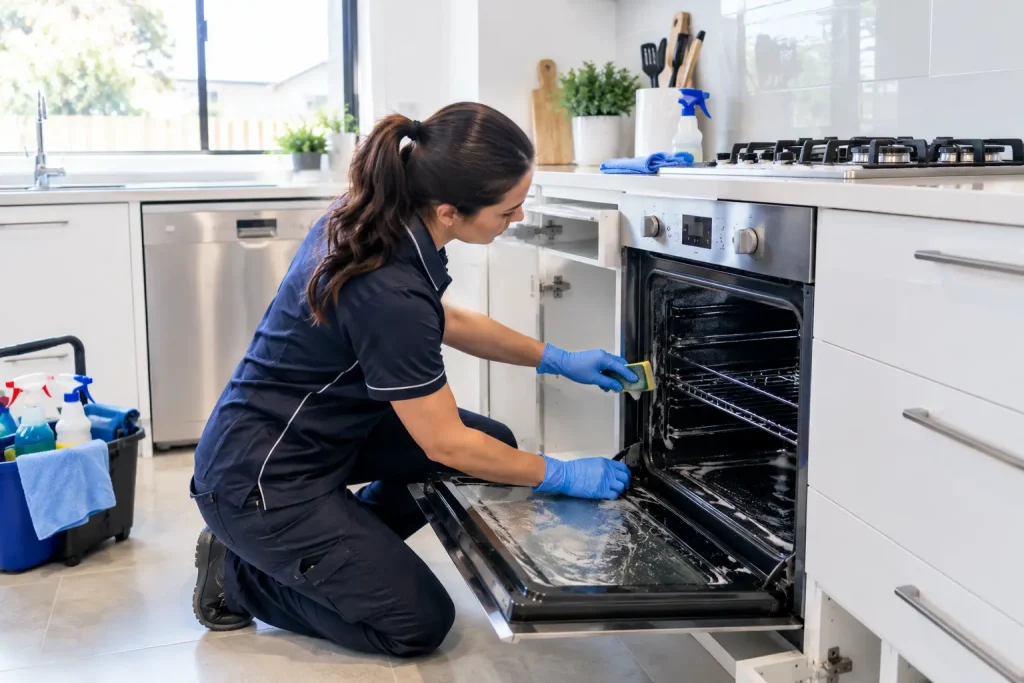
If after a second cleaning and inspection the place still isn’t quite up to the expected standards, it’s worth getting some help by a professional vacate service. Professional cleaners know what the general expectations are of end of lease cleans and have complete checklists that they can use. Hiring a professional is a good idea for items such as ovens, bathrooms, windows, carpets, walls and any other area that requires special cleaning equipment. Once the cleaning is scheduled, you should hand over the inspector’s list of the agent to the cleaner so that they can focus on the problematic areas. The condition of the tenancy, damage, maintenance issues and the original state of the property can influence the bond outcome.
Keep Evidence Of Everything
Well-maintained records can become invaluable after multiple failed inspections. Take before and after photos especially in areas referenced by the property manager. Take photos of ovens, bathrooms, floors, windows, carpets, appliances and any other high traffic location. Make sure the pictures are clear and dated if you can. Also retain copies of your entry condition report. This paperwork can help you prove the condition of the property when you moved in. Your paperwork should also contain dirty work invoices, emails, inspection reports, photos and messages to the agent.
| Evidence | Why It Can Help |
| Entry condition report | Shows the property’s starting condition |
| Cleaning photos | Records completed cleaning |
| Inspection report | Identifies requested rectification |
| Cleaning invoice | Shows professional cleaning occurred |
| Emails and messages | Records communication |
| Final photos | Documents the property’s condition |
Avoid deleting messages or receipts until the bond has been fully resolved.
Understand Bond Deduction Risks
Repeated cleaning failures can bond dispute risk. But a failed inspection does not necessarily mean the landlord gets to keep the whole bond. The deduction must be for a clean tenancy obligation and reasonable. The cleaning costs should also be reasonable and proportionate to the condition of the property. If an agent suggests a deduction, ask for an itemised breakdown. Understand what work the amount covers and why it is deemed your responsibility. Bond processes differ throughout Australia. Queensland, New South Wales, Victoria, Western Australia, South Australia, Tasmania, the ACT and the Northern Territory all have different tenancy systems. In the case of a large dispute, you may wish to speak to the relevant State or Territory tenancy authority.
Know When To Dispute
If the property manager is still refusing to get clean after a couple of attempts, ask if there are really any issues that are cleaning-related. Some are possibly repairs maintenance, wear and tear or damage. They should not be assumed to be regular cleaning duties. Have the agent justify each contested charge. This can be your condition on arrival, report pictures, notes of the house check and receipts of cleaning. In the event that no agreement can be reached, you would apply to the relevant tenancy dispute resolution service in your State or Territory. Get early advice to help you know your options before the dispute escalates.
Prevent Another Failed Inspection
To prevent repeated failures, it is best to prepare prior to the final inspection. Begin cleaning now and don’t wait until the last day to do everything. Take your time and view every room on its own. Pay attention to the kitchens, bathrooms, floors, windows, white goods, cupboards, skirting boards and the outdoors if it’s relevant. Use the report on the condition of your entry as a guide. It allows you to compare the current condition of the property with the condition it was in when you moved in. Inquire with the property manager about any special instructions for returning the keys. If you hire professional cleaners, just print out the entire checklist. Following the clean, perform your own inspection of the property prior to the final walkthrough.
Final Thoughts
What happens if bond clean fails inspection twice? It depends on the circumstances of each failure and the tenancy rules applicable to your property. You don’t automatically forfeit your bond after multiple cleaning requests. Ask for the full list of outstanding items first. Compare those requirements with the property’s condition at the start and your tenancy obligations. If window coverings are listed as an issue, How to clean roller blinds before moving out can help you address them properly. You may need further advice if the dispute involves damage, maintenance, or unfair rent retention. Most importantly, keep your communication clear and in writing. Being too harsh can escalate the situation, but being too mild might cost you your bond and cause unnecessary stress at the end of your lease.
Frequently Asked Questions
1. What happens if bond clean fails inspection?
You may be asked to rectify specific cleaning issues before the property is accepted. The process depends on your state and tenancy agreement.
2. Can a landlord keep my bond after a failed cleaning?
A landlord may be able to claim reasonable costs for genuine tenant-related cleaning issues. Bond rules differ between Australian states and territories.
3. How many times can a bond clean fail?
There is no universal number across Australia. The important issue is whether genuine cleaning obligations remain outstanding.
4. Can I dispute a bond cleaning deduction?
Yes, if you believe a deduction is unreasonable or unrelated to your tenancy responsibilities. Use the applicable state or territory dispute process.
Related Posts

How to Clean Light Fixtures Safely and Effectively?
Have you ever given much thought to your light fixtures, and wondered how much they…
7 Things You’re Doing Wrong When Disinfecting Your Home
Do you think that your house is indeed disinfected, or does it contain germs that…

Smart Tips for Deep Cleaning Your Freezer
Smart Tips for Deep Cleaning Your Freezer at Home Are you sick and tired of…